
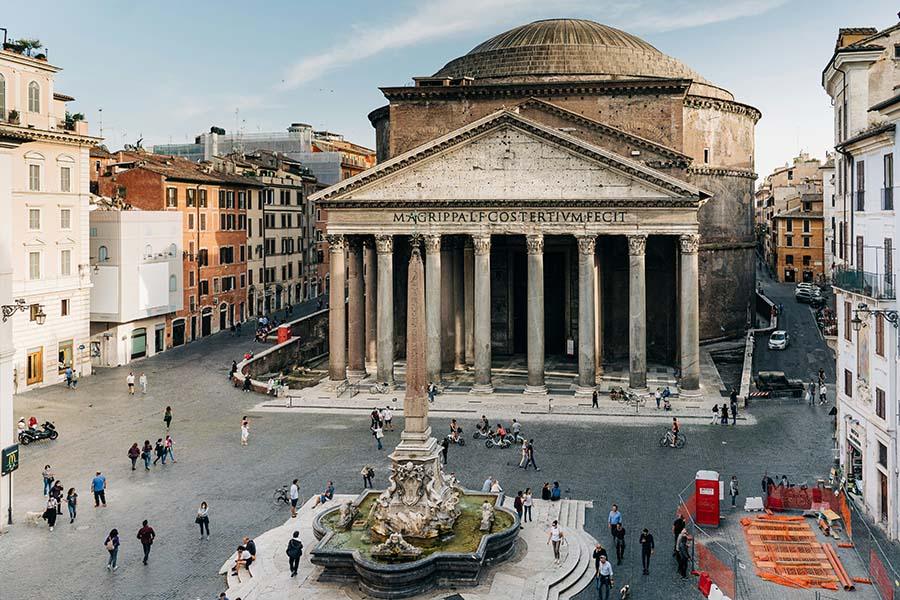
The square of pantheon in rome, officially known as Piazza della Rotonda, is a vibrant, must-see public space right in the historical core of the Eternal City. Dominated by the magnificent Pantheon, this square is not just a transit point but a destination in itself, brimming with history, architectural marvels, and a lively Roman atmosphere.
Overview of Piazza della Rotonda
Located in the Rione Pigna district, Piazza della Rotonda is one of the city’s most famous and beloved squares. Its unique name, Rotonda (Rotunda), comes from the popular name given to the Pantheon, which was converted into the Basilica of Santa Maria ad Martyres. The piazza’s charm lies in its harmonious blend of ancient grandeur and contemporary Roman life, making it the perfect spot to soak up the city’s spirit.
Historical Significance of Piazza della Rotonda
The square’s history is inextricably linked to the Pantheon. In ancient Roman times, the area served as a wide-open space in front of the temple. Over the centuries, particularly in the Renaissance, the square took its current shape. Popes like Eugenius IV and Clement XI oversaw significant developments, including the installation of the central fountain and the eventual clearance of surrounding medieval structures to better showcase the ancient temple. This deep history makes every step on the Piazza della Rotonda an experience.
Key Attractions in Piazza della Rotonda
While the Pantheon is the undisputed star, the square features a few other notable attractions:
- Fontana del Pantheon: Designed by Giacomo della Porta in 1575, the fountain is a beautiful example of Renaissance artistry. In 1711, Pope Clement XI commissioned the Egyptian obelisk of Ramesses II to be placed atop the fountain, adding a striking ancient element.
- The Pantheon’s Facade: Take a moment to appreciate the sheer scale and architectural perfection of the temple’s portico and dome, which defines the square.
The Pantheon: The Jewel of the Square
The Pantheon is arguably the best-preserved building of ancient Rome and the main draw to the square. Originally built by Agrippa and rebuilt by Emperor Hadrian around $126$ AD, it has served as a Catholic church since the $7$th century. Its most famous feature is the incredible dome with the central opening, the oculus, which remains open to the sky and is a true engineering marvel.
Dining and Shopping Options in Piazza della Rotonda
The square and the surrounding narrow streets are lined with trattorias, cafes, and gelaterias. While some establishments directly on the piazza cater to tourists, they offer an unparalleled view and a quintessential Roman dining experience. It’s a fantastic spot for an aperitivo or an espresso while enjoying the atmosphere. You’ll also find souvenir shops and small boutiques nearby.
Events and Festivals in the Square
Piazza della Rotonda is occasionally a venue for cultural events, though its most famous informal spectacle is the daily flow of street artists, musicians, and vendors that contribute to its bustling character. Historically, it was also the location of an annual Christmas fair, reflecting its long-standing role as a community gathering space.
How to Reach Piazza della Rotonda
The square is easily accessible as it lies in a very central location. The area is largely restricted to traffic, so walking is the best way to get there.
- By Metro: The closest metro stops are Barberini (Line A) or Colosseo (Line B), both requiring a subsequent $15-20$ minute walk.
- By Bus: Numerous bus lines stop near the adjacent Largo di Torre Argentina.
Visiting the square is best done early in the morning or late in the afternoon to avoid peak crowds, allowing you to fully appreciate the splendor of this place in Rome and its iconic temple.