
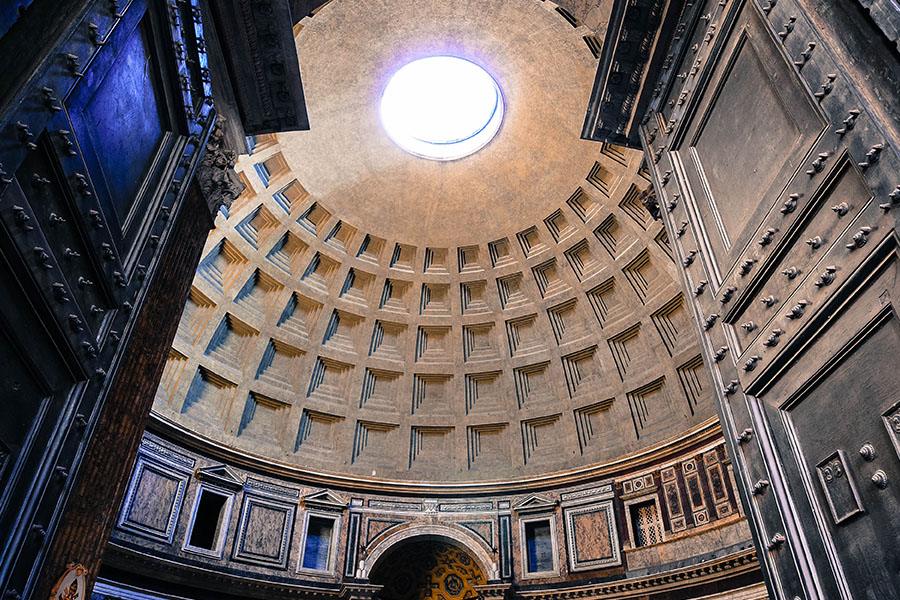
The Pantheon in Rome stands as one of the best-preserved and most iconic monuments of Roman architecture. While many visitors gaze upwards at its massive dome and oculus, the magnificent bronze entrance, often referred to as the Pantheon door, is a masterpiece in its own right. This door is not just a simple entryway; it’s a profound architectural statement and a tangible link to the building’s nearly two-thousand-year history.
Overview of the Pantheon Door
The imposing scale of the entrance is immediately apparent. These monumental Pantheon doors are vast, measuring approximately 7.53 meters (24.7 feet) high and 4.35 meters (14.3 feet) wide. The sheer size and weight hint at their original function: to impress and secure. Despite popular belief and the door’s ancient appearance, the current structure is a mix of original components and medieval restorations, making its history as fascinating as its aesthetics.
Historical Background of the Pantheon Door
The original doors of the Pantheon, built under Emperor Hadrian around $126$ AD, were indeed bronze. However, over the centuries, the structure suffered from damage, neglect, and the reuse of its valuable materials. The doors seen today are largely based on the original design but have undergone significant restoration, particularly during the papacy. The most substantial work likely occurred during the Middle Ages and Renaissance, which makes tracing the precise origin of every component a complex historical puzzle. Nonetheless, the essence of the imperial-era design—its scale, proportion, and material choice—remains.
Design and Materials Used in the Door
The Pantheon door is composed of two massive bronze leaves. The material itself is a crucial element, as bronze was a highly prized and durable material in Roman times. The design is characterized by a series of square and rectangular panels framed by heavy moldings. These decorative panels feature a central boss or rosette pattern, adding depth and visual rhythm. The doors pivot on substantial vertical hinge pins, and their mechanism, though ancient in concept, is still remarkably functional, allowing the heavy leaves to be opened and closed daily. The craftsmanship displayed in the detailed casting and robust framework speaks volumes about the engineering prowess of both the Roman era and subsequent restorers.
The Significance of the Door in Roman Architecture
The scale and material of the pantheon door were integral to the building’s overall architectural concept. It served as a grand ceremonial entrance, emphasizing the transition from the bustling secular world of the Roman Forum to the divine, awe-inspiring space within the rotunda. Its height perfectly complements the colossal granite columns of the portico, maintaining a sense of monumental harmony. This emphasis on bronze and monumental scale was a characteristic of Imperial Roman architecture, meant to convey the power, wealth, and engineering skill of the empire.
Visiting the Pantheon: What to Look for at the Entrance
When you visit, take a moment to appreciate the details that make the Pantheon doors so unique. Observe the sheer thickness of the bronze and the intricate detail of the paneling. Also, notice the modern-day wear and patina that tell the story of two millennia of use. The doors stand in stark contrast to the modern world outside, serving as a powerful visual anchor to the past before you even step inside to see the famous dome and oculus.
Legends and Stories Associated with the Pantheon Door
As with many ancient structures, a number of legends surround the Pantheon door. One persistent tale, now widely considered a myth, suggests that these are the original Roman doors, untouched for 2,000 years. While they retain a heavy original structure and design, the restorations are undeniable. Another, more whimsical story often told to visitors is that the heavy bronze of the doors was cast from melted-down Roman coins or even spoils of war, adding a romantic layer to its imposing presence.
The Pantheon door is far more than an entrance; it is a historic portal. Its weight, material, and design embody the endurance and ambition of Roman civilization, acting as the perfect prelude to the architectural marvel that lies beyond.