
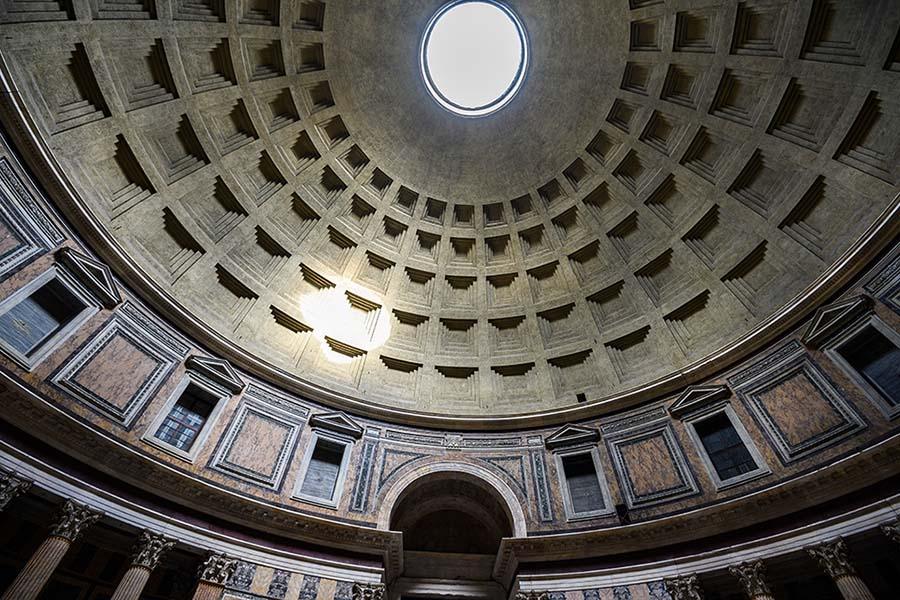
The Pantheon in Rome stands as one of the best-preserved and most influential buildings of ancient times. While its massive dome is a marvel in itself, it is the circular opening at its apex — the Oculus — that captures the imagination and serves as the structure’s architectural crown jewel.
What is the Oculus of the Pantheon?
The Oculus (meaning “eye” in Latin) is a perfectly circular, unglazed opening at the very center of the dome’s coffered ceiling. It is the single source of natural light for the entire building. With a diameter of 8.2 meters ($27$ feet), it is a bold, almost audacious design element that dominates the interior. The oculus in the pantheon is not merely a hole; it is a meticulously engineered component that defines the experience of visiting this iconic Roman temple.
The History and Design of the Oculus
The current structure of the Pantheon was built around 126 AD by the Emperor Hadrian, replacing an earlier temple. The dome, a feat of Roman engineering, was the largest unreinforced concrete dome in the world for over a millennium. The pantheon oculus was an integral part of this design from the beginning. Its huge dimensions were likely chosen to perfectly complement the geometry of the dome itself, which is a perfect sphere resting on a cylinder. The opening’s edge is framed by a bronze cornice, which serves both as decoration and as a protective measure against rain erosion.
Purpose of the Oculus in the Pantheon
The oculus purpose is multi-faceted, serving practical, structural, and spiritual functions.
- Structural Relief: By removing the heavy mass of material at the dome’s keystone, the oculus significantly reduces the dome’s overall weight, relieving internal stresses and helping prevent collapse.
- Ventilation: It provides natural airflow, helping to vent the building.
- Symbolic Connection: Most importantly, it creates a direct, unmediated connection between the interior and the heavens, symbolizing the connection between the gods and the Roman people.
How the Oculus Influences Light and Atmosphere Inside the Pantheon
The oculus of the Pantheon has a profound impact on the atmosphere within. As the sun moves across the sky, a dramatic, ever-changing column or shaft of light sweeps across the interior walls and floor. This dynamic light serves as a kind of ancient sundial, marking the passage of time and creating an ethereal, almost spiritual ambiance. When it rains, the water falls directly onto the marble floor and drains away through hidden holes, a phenomenon that underscores the oculus of pantheon’s deliberate exposure to the elements.
The Architectural Significance of the Oculus
The design of the oculus is a testament to the sophistication of Roman architectural engineering. It is the sole component that allows the massive dome to feel light and airy, defying the heaviness of its concrete construction. The precision required to maintain the structural integrity of the dome while creating such a large, unsupported aperture is a major reason why the oculus is considered an architectural masterpiece.
Legends and Myths Surrounding the Oculus of the Pantheon
The most famous—and false—legend claims that the rain never enters the building. This myth stems from the powerful thermal draft created by the difference in temperature between the inside and outside, which can sometimes atomize the raindrops into a fine mist. Another tale suggests that the original use of the building as a temple for all the gods meant the opening was necessary to allow smoke from sacrifices to escape.
The oculus of the Pantheon remains a stunning example of genius and beauty, a window to the sky that has inspired awe for nearly two millennia.